Source Galvanized Adjustable Air Duct Damper for HVAC Ventilation and Air Conditioning
Find 30 listings for the galvanized adjustable air duct damper designed for HVAC systems, ventilation, and air conditioning applications. Buyers can compare models like PVA, RDB, and RDD with sizes ranging from 100mm to 350mm and various certifications including CE.
Key considerations
Products List




Comprehensive Sourcing Guide
Sourcing Guide for Galvanized Adjustable Air Duct Dampers
Understanding Technical Specifications and Model Variants
When sourcing a galvanized adjustable air duct damper, the primary objective is to align the product's physical and functional attributes with the specific requirements of the HVAC or ventilation system. The available market data indicates a diverse range of models, including PVA, RDB, RDD, RDAX, and RDC, each potentially serving distinct operational needs within a duct system. A critical technical observation is the material composition, which is predominantly listed as Galvanized Sheet or Galvanized Steel. This material choice is fundamental for corrosion resistance and durability in environments where moisture or humidity might be present, ensuring the longevity of the damper blades and frame.
The dimensional specifications are equally vital for integration. The observed size range for these dampers includes 100mm, 125mm, 150mm, 160mm, 200mm, 250mm, 300mm, and 350mm. Buyers must verify that the selected damper matches the exact duct dimensions of their project to ensure a proper seal and efficient airflow control. The shape of the damper is consistently noted as Round, which is a standard configuration for circular ductwork commonly found in residential and commercial ventilation systems. The plane of operation for the damper blades is adjustable from 0 to 90 degrees, allowing for precise modulation of airflow from fully closed to fully open positions. This range is essential for balancing air distribution and maintaining pressure within the duct network.
Furthermore, the finish and surface treatment play a significant role in performance. The supply chain data mentions a Zinc Plated finish and confirms that surface treatment is available. This process enhances the galvanized steel's resistance to rust and extends the service life of the component. The connection mode is specified as External Thread for certain models, such as the Dr-K variant, while others are designed for installation directly into duct work. Understanding these mechanical interfaces is crucial for procurement, as mismatched connection types can lead to installation failures or the need for costly custom adapters.
Compliance, Certification, and Safety Standards
In the realm of HVAC components, compliance with international and regional standards is non-negotiable for ensuring safety and performance. The provided data explicitly lists CE certification as a high-confidence attribute for the available galvanized dampers. The CE mark indicates conformity with health, safety, and environmental protection standards for products sold within the European Economic Area. Buyers should verify that the specific batch or model they intend to purchase carries valid CE documentation, as this is a primary indicator of regulatory compliance in many global markets.
While the data references UL 555 as a background standard, it is categorized as low-confidence and should not be assumed as a guaranteed feature of every listed product without direct verification from the supplier. UL 555 is a standard for fire dampers, and if the application requires fire-rated performance, buyers must explicitly request test reports or certification documents confirming that the specific damper model meets this standard. Relying on general market knowledge without supplier confirmation can lead to compliance gaps, particularly in commercial buildings where fire safety codes are strict.
Additionally, the standard designation "Regulating Damper" appears in the product attributes, suggesting that these units are designed for airflow regulation rather than fire isolation. However, the distinction between a regulating damper and a fire damper is critical. A regulating damper controls volume, while a fire damper is designed to close automatically in the event of a fire to prevent the spread of flames and smoke. Procurement teams must ensure that the product's intended standard matches the building code requirements of the installation site. If the project requires fire dampers, the galvanized adjustable damper described in the general product list may not be sufficient unless explicitly certified for fire resistance.
Cost Drivers and Pricing Dynamics
The pricing for galvanized adjustable air duct dampers is influenced by several variables, including material costs, manufacturing complexity, and order volume. The observed price range in the market spans from 0.5 USD to 200 USD per unit. This wide disparity suggests that the final cost is heavily dependent on the specific model, size, and customization level. Smaller units or standard models likely fall at the lower end of the spectrum, while larger diameters, custom finishes, or specialized models may command higher prices.
Material costs are a primary driver, given that the dampers are constructed from galvanized steel or galvanized sheet. Fluctuations in the global steel market can directly impact the unit price. Additionally, the surface treatment processes, such as zinc plating, add to the manufacturing cost. Buyers should anticipate that higher-quality finishes or additional protective coatings will increase the price point.
Order volume is another significant factor. The Minimum Order Quantity (MOQ) varies widely, with observed ranges from 1 unit up to 5000 units. Some suppliers list an MOQ of 100 pieces, while others may be more flexible. Purchasing in larger quantities typically results in a lower unit cost due to economies of scale in production and shipping. However, for smaller projects or replacement parts, buyers may need to negotiate with suppliers who offer lower MOQs, potentially accepting a higher per-unit price. Customization options, such as specific sizes or finishes, can also introduce additional costs that must be factored into the budget.
Typical Applications and Operational Context
Galvanized adjustable air duct dampers are versatile components designed for a variety of applications, primarily within the HVAC and ventilation sectors. The data indicates that these products are suitable for use in air conditioning systems, general ventilation, and home applications. The "Air Duct" feature and "Ventilation" function highlight their role in managing airflow distribution, ensuring that conditioned air reaches the intended spaces efficiently.
In residential settings, these dampers are often used to balance airflow between different rooms or zones, preventing over-pressurization or under-ventilation. In commercial and industrial environments, they play a critical role in system balancing, allowing facility managers to adjust airflow to meet changing occupancy or load requirements. The "Round" shape and compatibility with duct work make them ideal for circular duct systems, which are common in many HVAC designs due to their structural efficiency and ease of installation.
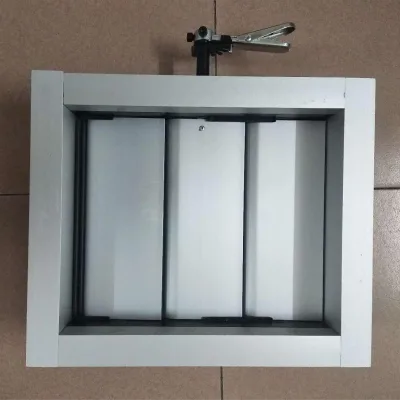
The "Handle" accessory listed in the product attributes suggests that many of these dampers are manually operated, requiring physical adjustment by a technician or facility manager. This manual operation is suitable for systems where airflow settings do not require frequent or automated changes. For applications requiring automated control, buyers may need to explore options for motorized actuators, although the current data focuses on manual regulation. The "High Temperature" attribute for certain models indicates that some variants are designed to withstand elevated temperatures, making them suitable for applications involving exhaust systems or specialized industrial processes.
Supplier Evaluation and Trade Terms
Selecting the right supplier is a critical step in the procurement process. The data indicates that suppliers are located in China, a major hub for HVAC component manufacturing. Buyers should evaluate potential suppliers based on their ability to provide the specific technical attributes required, such as the correct size, material, and certification. The availability of OEM/ODM services is a significant advantage, allowing buyers to customize products to meet specific project needs or branding requirements.
Trade terms are another important consideration. The observed trade terms include EXW (Ex Works), FOB (Free on Board), and CIF (Cost, Insurance, and Freight). These terms define the responsibilities of the buyer and seller regarding shipping, insurance, and risk transfer. EXW places the maximum responsibility on the buyer, who must arrange and pay for all transportation from the supplier's factory. FOB and CIF offer more convenience, with the seller responsible for delivering the goods to the port or destination, respectively. Buyers should choose the term that best aligns with their logistics capabilities and risk tolerance.
The lead time for delivery is noted as 25 days in the provided data. This timeline should be factored into project scheduling to ensure that the dampers arrive before the installation phase begins. Buyers should also inquire about the supplier's after-sales service capabilities, as the data confirms that service provision is available. A supplier with a robust after-sales support system can be invaluable for troubleshooting installation issues or addressing quality concerns post-delivery.
Quality Control and Long-Term Procurement Considerations
Ensuring the quality of galvanized adjustable air duct dampers requires a rigorous approach to quality control. Buyers should verify that the manufacturing process includes proper surface treatment and finishing, such as zinc plating, to prevent corrosion. The "Casting" technique mentioned in the data suggests that some components may be cast, which requires careful quality checks to ensure structural integrity and dimensional accuracy.
Long-term procurement considerations include the availability of spare parts and the consistency of product quality over time. Since the product count is 30 and the models vary, buyers should ensure that the supplier can maintain a consistent supply of the specific model and size required for the project. The "Provide" after-sales service attribute indicates that suppliers are willing to support their products, but buyers should clarify the scope of this support, including warranty periods and response times.
Furthermore, the customization options available, such as specific sizes and finishes, should be documented clearly in the purchase order to avoid discrepancies. The "Carton Box" and "Pallet" packing options suggest that the products are packaged for safe transport, but buyers should verify that the packaging is sufficient to prevent damage during shipping, especially for international orders. By focusing on these quality and logistical factors, buyers can mitigate risks and ensure a smooth procurement process for their HVAC projects.
Summary of Key Product Attributes
| Attribute Category | Observed Values / Options |
|---|---|
| Material | Galvanized Sheet, Galvanized Steel, Stainless Steel, SUS, Hot DIP Galvanized Steel, Mild Steel |
| Size Range | 100, 125, 150, 160, 200, 250, 300, 350 (mm) |
| Shape | Round |
| Damper Plane | 0~90 Degree |
| Certification | CE (High Confidence) |
| MOQ | 1 to 5000 (Common: 100 PCS) |
| Packing | Carton Box, Carton, Pallet |
| Origin | China |
| Finish | Zinc Plated |
| Connection | External Thread, Duct Work Installation |
| Operation | Manual |
| Applications | HVAC, Air Conditioning, Ventilation, Home |
This comprehensive overview provides a foundation for buyers to make informed decisions when sourcing galvanized adjustable air duct dampers. By carefully evaluating technical specifications, compliance, cost drivers, and supplier capabilities, procurement teams can secure high-quality components that meet the demands of their specific HVAC projects.
FAQs
What certifications do these dampers have?
These galvanized adjustable air duct dampers carry CE certification, indicating compliance with European safety standards. While UL 555 is mentioned in background data, it is not confirmed as a standard feature for every listed product without direct verification from the supplier.
Which materials are used for construction?
The dampers are primarily constructed from galvanized sheet or galvanized steel to ensure corrosion resistance. Some models also utilize stainless steel, SUS, or mild steel, with surface treatments like zinc plating available to enhance durability in humid environments.
How can I customize the damper size?
Customization is available for various sizes including 100, 125, 150, 160, 200, 250, 300, and 350 millimeters. Buyers can select specific dimensions to match their ductwork, ensuring a proper seal and efficient airflow control within the HVAC system.
What is the minimum order quantity?
The minimum order quantity ranges from 1 to 5000 units depending on the supplier and specific model. Many suppliers list an MOQ of 100 pieces, but some flexibility exists for smaller projects or replacement parts with potentially higher per-unit costs.
Can I get these dampers with a handle?
Yes, handles are available as accessories for manual operation of the damper blades. This allows technicians to adjust airflow from 0 to 90 degrees, providing precise modulation for balancing air distribution in residential or commercial ventilation systems.
What is the typical delivery lead time?
The standard delivery time is approximately 25 days from the order date. Buyers should factor this timeline into their project scheduling to ensure the dampers arrive before the installation phase begins, especially for international orders requiring specific shipping terms.
Are OEM and ODM services accepted?
Suppliers accept both OEM and ODM requests to meet specific project needs or branding requirements. This allows buyers to customize product attributes such as finishes, sizes, or packaging options while maintaining the core functionality of the galvanized adjustable air duct damper.